The Argument
The World Happiness Report ranks countries by how happy their citizens report feeling. But what actually drives that score? These three charts build a case that while GDP matters, it's only part of the story — family bonds, health, and personal freedom are equally powerful contributors to national happiness, especially at the top of the rankings.
The Dataset
Data from the World Happiness Report, covering 158 countries. Key columns include Happiness Score, Economy (GDP per Capita), Family, Health (Life Expectancy), Freedom, Trust in Government, and Generosity. Source: Kaggle / World Happiness Report.
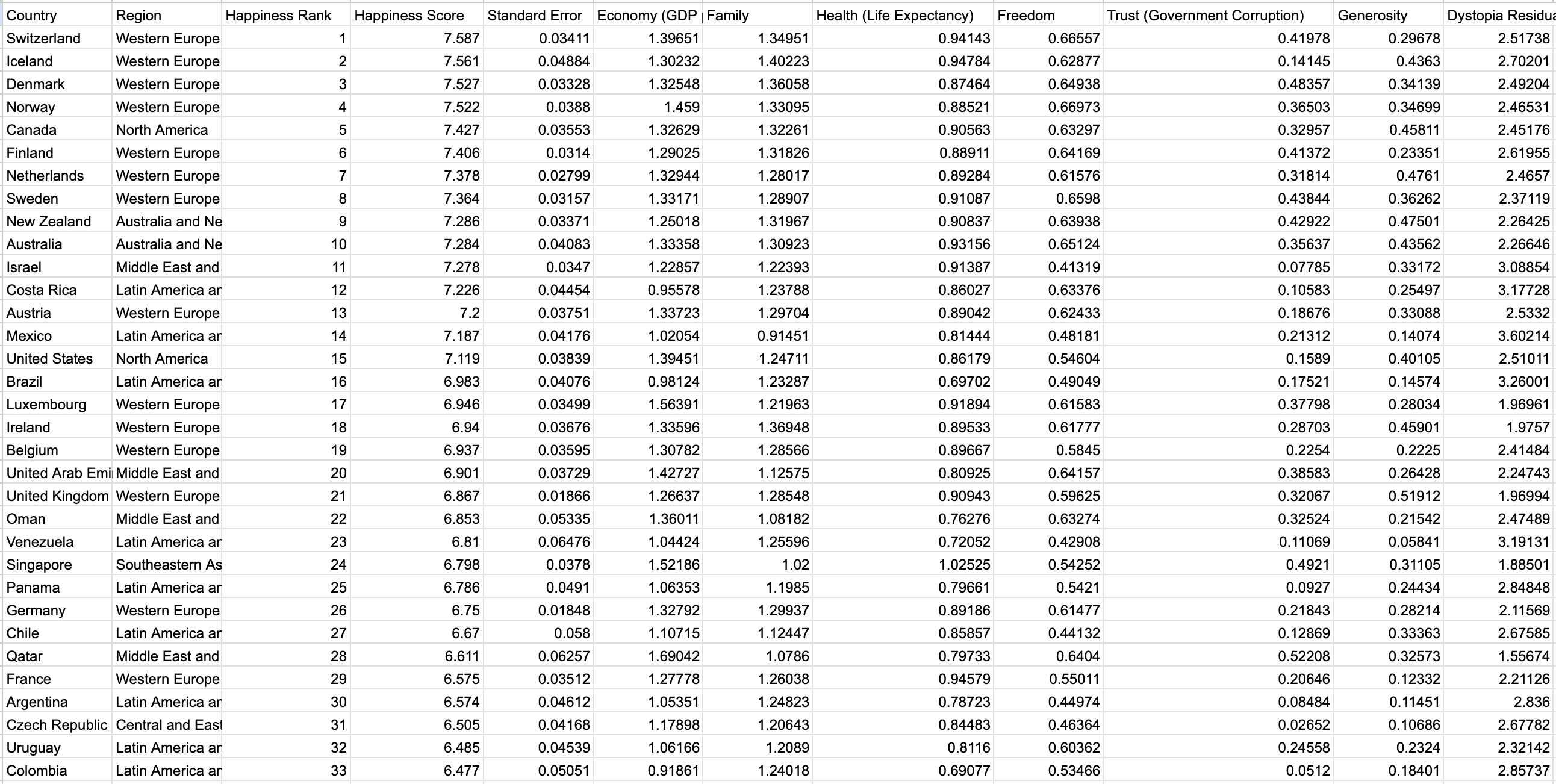
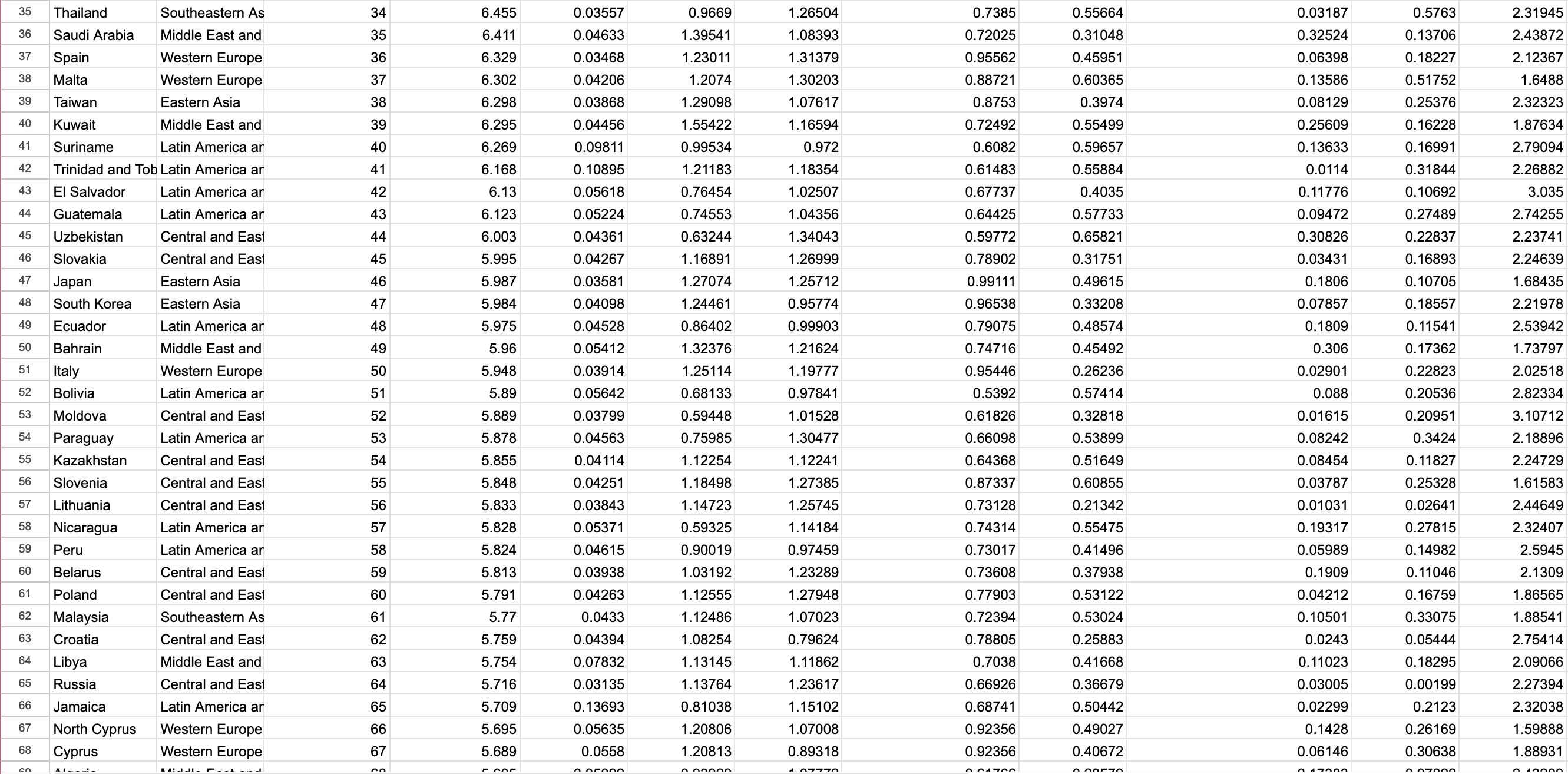
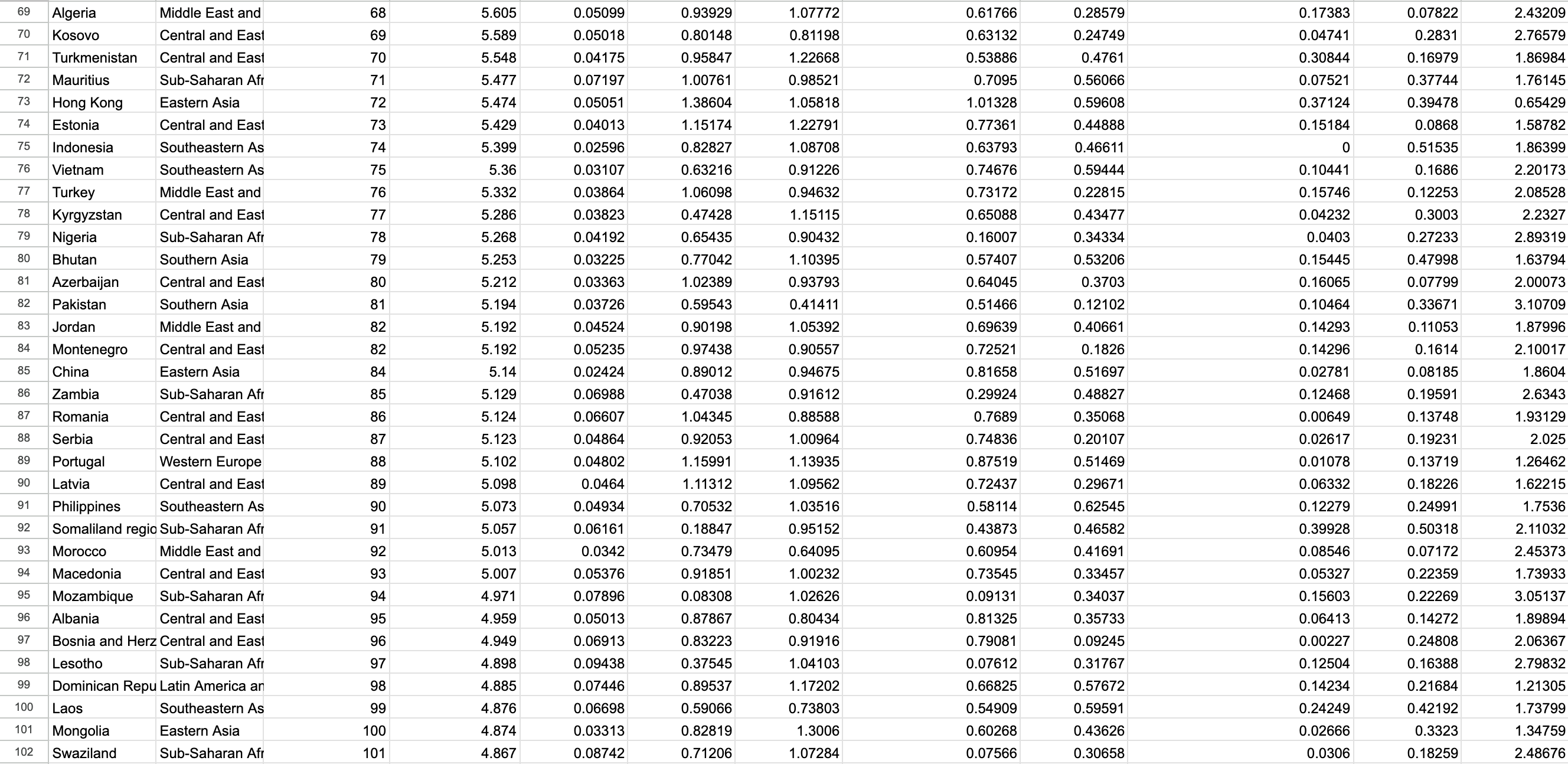
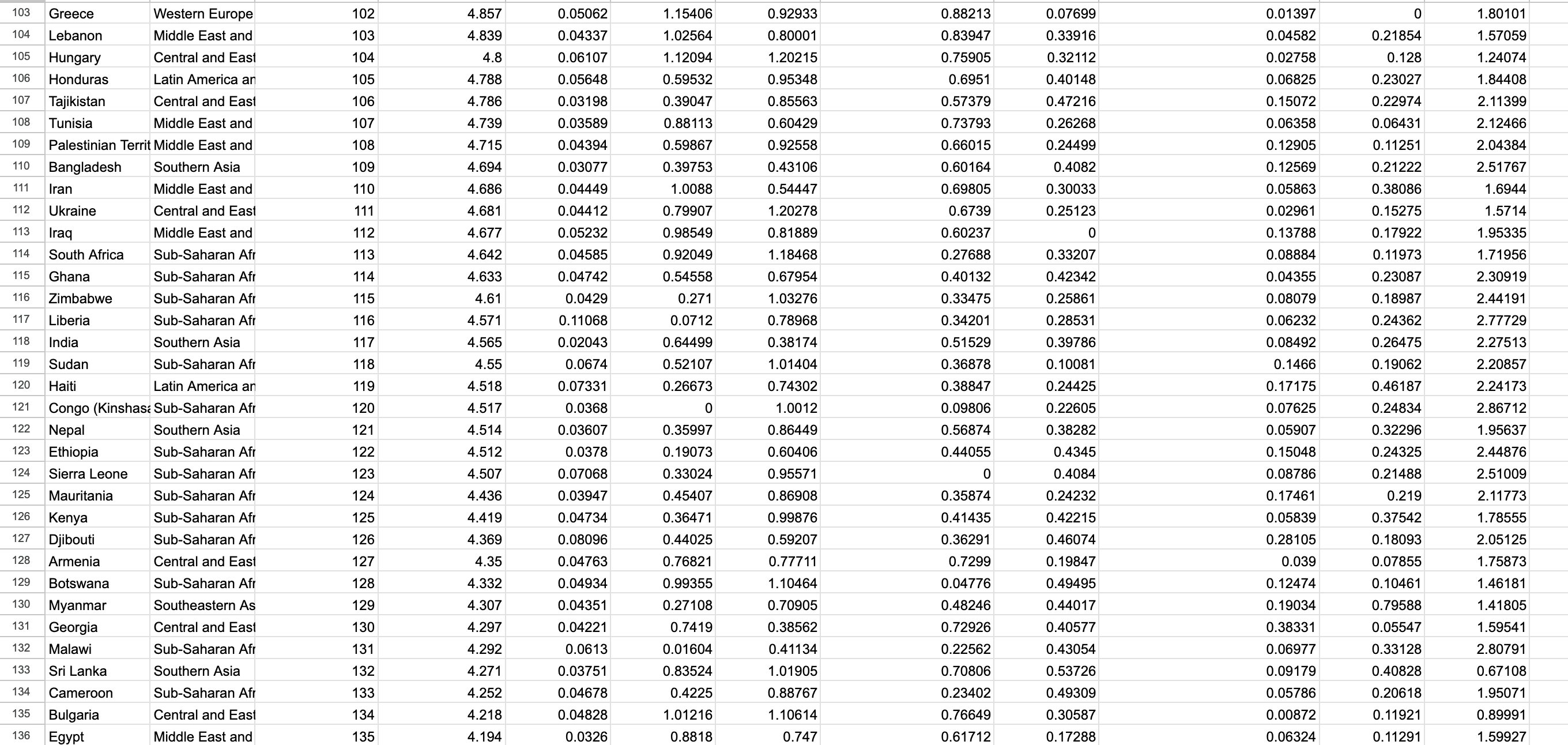
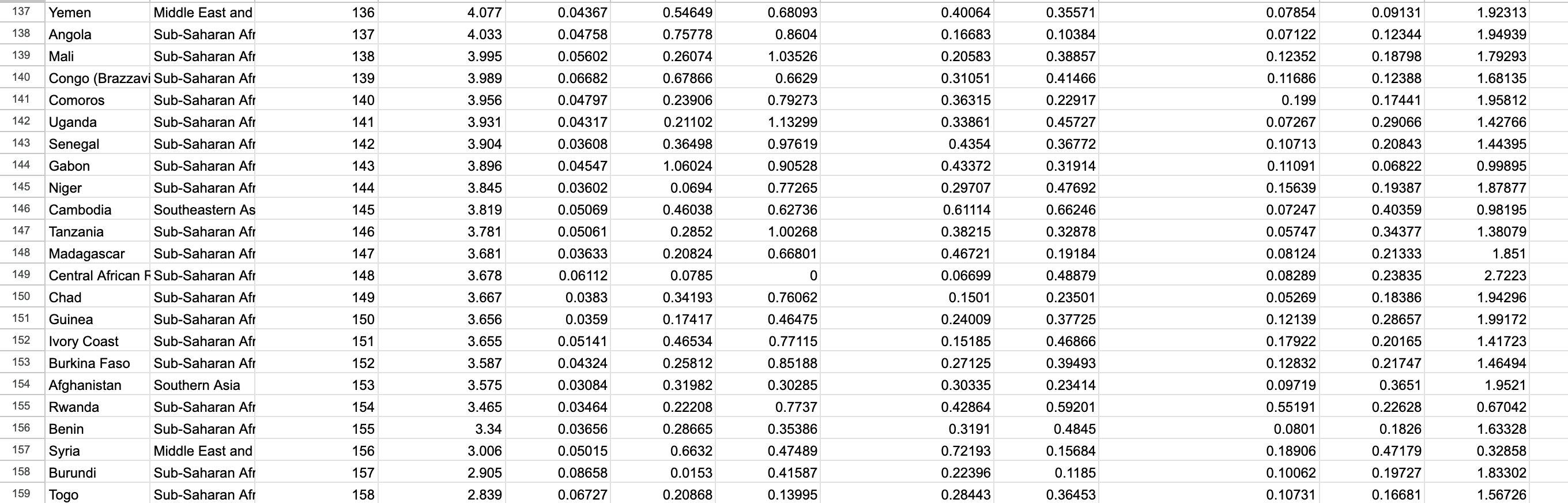
Chart 01
GDP vs. Happiness Score — All Countries
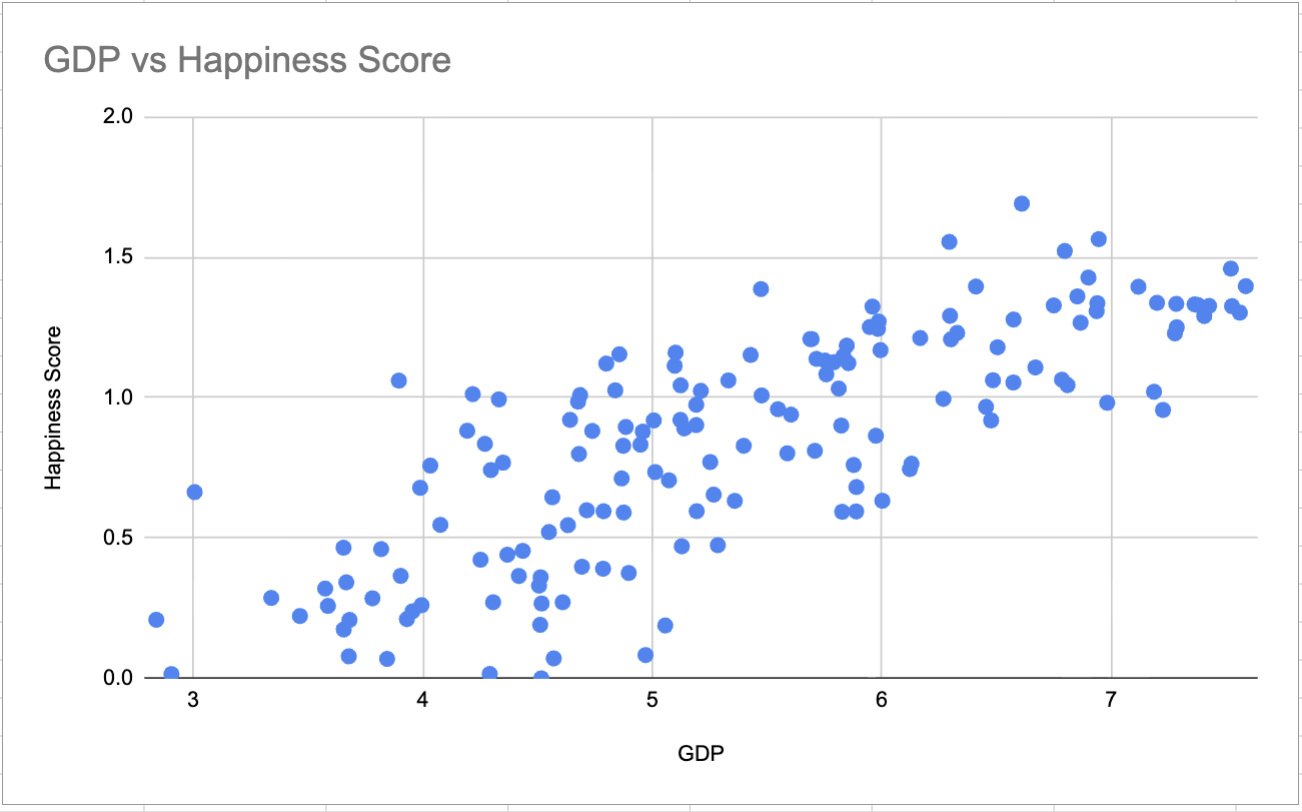
This scatter plot shows a clear upward trend — as GDP per capita rises, happiness scores generally rise too. But the spread is wide: plenty of countries with similar GDP levels land at very different happiness scores. This tells us wealth creates the conditions for happiness, but doesn't guarantee it. Countries in the lower-left cluster show that low income strongly limits happiness, while the upper-right shows that high-income nations still vary considerably.
Chart 02
Happiness Score by Country — Top 10
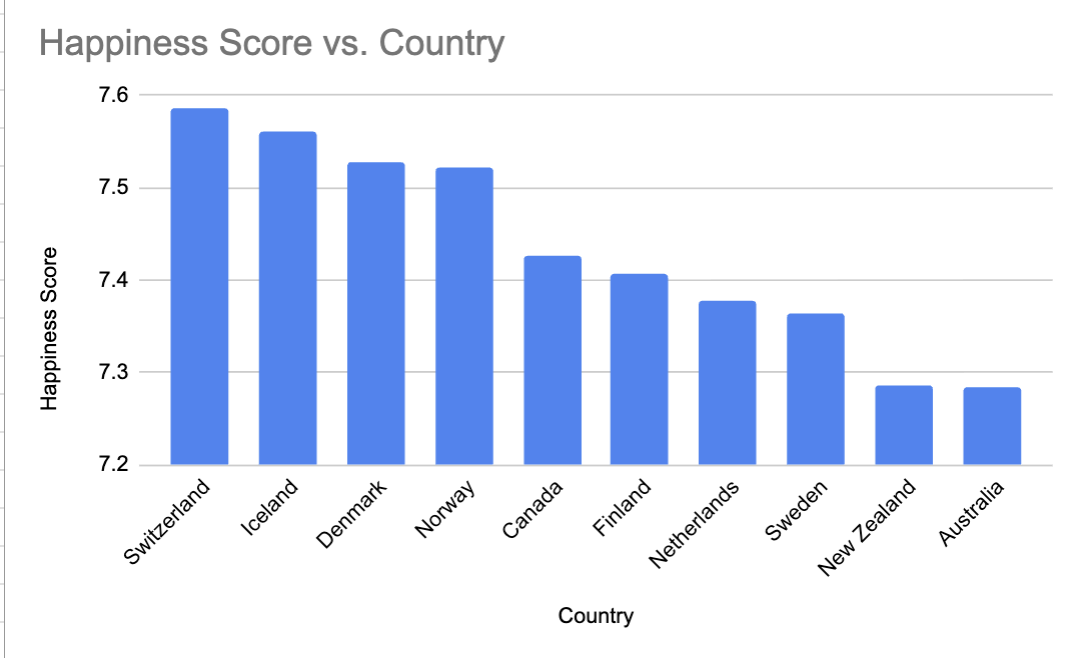
The top 10 happiest countries are clustered tightly between scores of 7.28 and 7.59 — a remarkably narrow range. Switzerland leads, followed closely by Iceland, Denmark, and Norway. Notably, all 10 are wealthy, democratic nations with strong social safety nets. The small gaps between them suggest these countries have all "solved" the basic ingredients of happiness, and the differences come down to subtle cultural or policy factors.
Chart 03
Happiness Factor Breakdown — Top 5 Countries
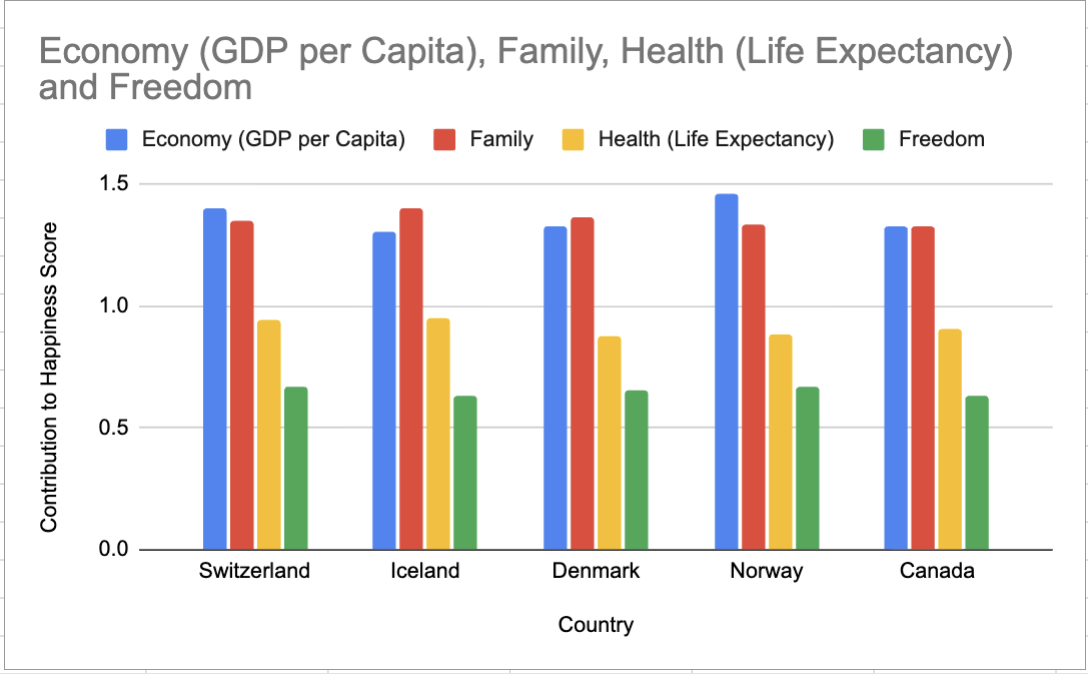
This chart is the most revealing of the three. Looking at the top 5 countries side by side, GDP (blue) and Family (red) contribute almost equally to happiness — and in Iceland's case, Family actually outscores GDP. Freedom (green) is the lowest contributor but still consistent across all five nations. This challenges the idea that economic output is the primary driver of happiness — social connection and family support appear just as essential, if not more so.
Conclusion
Taken together, these three charts tell a nuanced story about happiness. GDP is a necessary foundation — the scatter plot makes clear that poverty limits happiness. But among wealthy nations, the gap closes fast, and what separates the very happiest countries is the strength of their social fabric: family, health systems, and personal freedom.
The data suggests that policies focused purely on economic growth may miss the point. The happiest countries invest equally in people — their relationships, their health, and their freedoms.